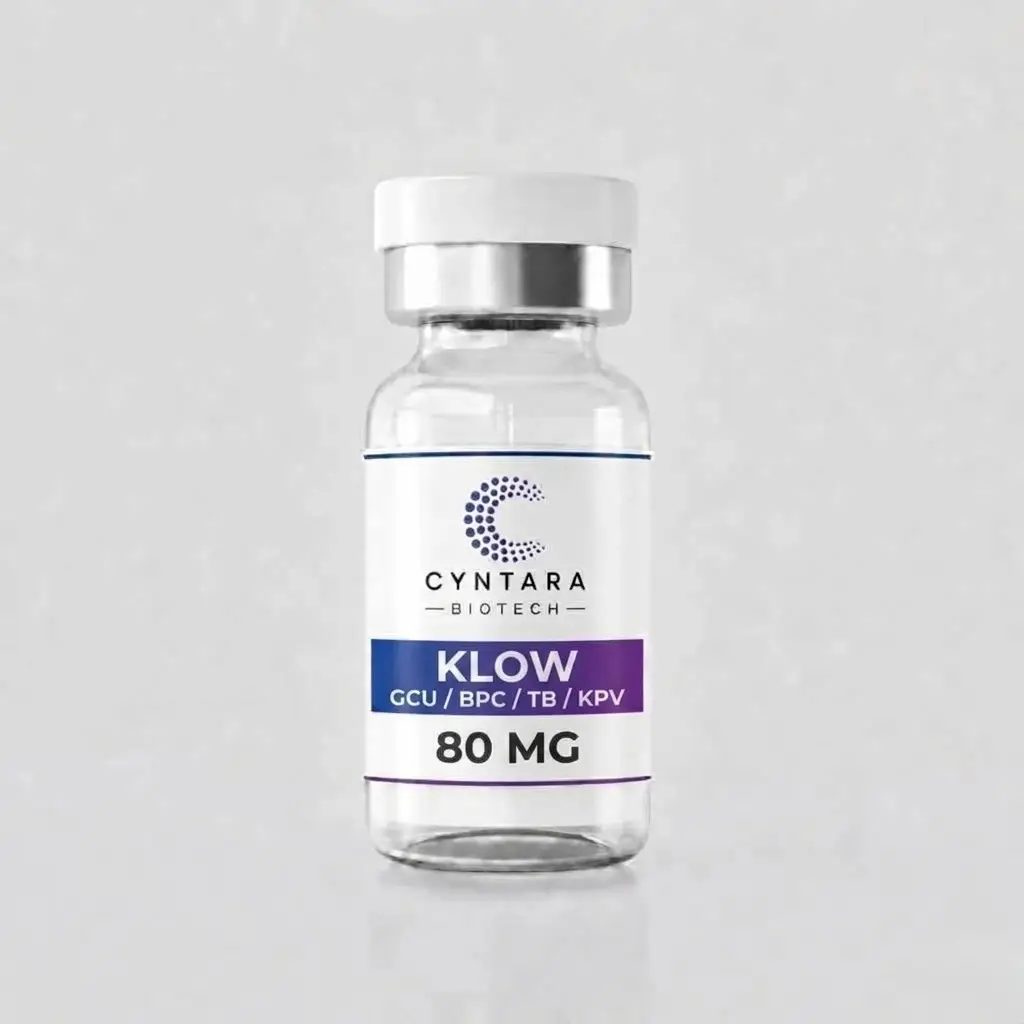
KLOW 80 MG

RM360.00

Four-peptide blend · GHK-Cu + BPC-157 + TB-500 + KPV

A four-peptide regenerative and dermal-research blend combining cytoprotective, vascular, and copper peptides.

In stock — ships from Malaysia

Add RM100.00 to cart and get free shipping!
Description

Description

Key Research Findings

  • GHK-Cu — copper-carrying tripeptide; collagen synthesis in fibroblast culture and broad changes in repair-related gene activity, reviewed in International Journal of Molecular Sciences (2018).
  • BPC-157 — a large preclinical literature on wound healing and tendon, ligament and gastrointestinal repair, reviewed in Frontiers in Pharmacology (2021).
  • TB-500 / thymosin β4 — cell migration and cardiac repair reported in Nature (2004).
  • KPV — anti-inflammatory activity through suppression of NF-κB signalling, reported in Gastroenterology (2008) and JPET (2003).
  • No published study has examined these four peptides administered together.

Research described here was conducted on the individual peptides, not on this blend. Provided as scientific background only.

Overview

  • A single 80 mg lyophilised vial containing four peptides.
  • GHK-Cu — a copper-carrying tripeptide associated with collagen and skin repair.
  • BPC-157 — a 15-amino-acid sequence associated with blood vessel formation and connective tissue repair.
  • TB-500 — a fragment of thymosin β4, associated with cell movement toward injury sites.
  • KPV — a three-amino-acid fragment of α-MSH, associated with damping inflammation.
  • Supplied for laboratory research only.

How It Works

  • GHK-Cu — delivers copper to enzymes involved in cross-linking collagen and elastin, and shifts the activity of repair-related genes.
  • BPC-157 — promotes new blood vessel growth via VEGFR-2 and helps fibroblasts migrate through the FAK–paxillin pathway.
  • TB-500 — binds actin, the protein forming a cell’s internal scaffolding, making cells more mobile.
  • KPV — suppresses NF-κB signalling, a central switch controlling inflammatory gene activity.
  • Each peptide addresses a different part of the repair process: building tissue, supplying blood, moving cells, and limiting inflammation.

Mechanistic Hypothesis — Untested

The four peptides are combined because each is associated with a different stage of tissue repair: GHK-Cu with building collagen, BPC-157 with establishing blood supply, TB-500 with moving cells toward injury, and KPV with limiting inflammation. Grouped together they cover more of the repair process than any one of them alone.

This is a rationale, not a result. No published study has tested the four peptides in combination, and covering complementary pathways does not by itself demonstrate a combined effect. The blend is commonly referred to as the “KLOW Stack”.

Research Effects

Lab & Animal Studies

Tissue Repair

Wound healing and connective tissue repair reported for GHK-Cu and BPC-157 in laboratory and animal models.

Lab & Animal Studies

Collagen & Matrix Synthesis

Increased collagen and glycosaminoglycan production reported for GHK-Cu in fibroblast culture.

Lab & Animal Studies

Angiogenesis

New blood vessel formation reported for BPC-157 and thymosin β4.

Lab & Animal Studies

Cell Migration

Actin-mediated cell movement and progenitor recruitment reported for thymosin β4.

Lab & Animal Studies

Anti-Inflammatory Activity

NF-κB suppression and reduced intestinal inflammation reported for KPV in rodent models.

Lab & Animal Studies

Gastrointestinal Repair

Mucosal protection reported for BPC-157 and KPV separately in animal models.

Mechanistic Hypothesis

Combined Effect

The four peptides are grouped because they act on different stages of repair. No study has tested the combination.

Lab & Animal Studies — laboratory or animal studies onlyMechanistic Hypothesis — proposed on mechanism, not tested

View the full research library →
Research use only. Sold strictly for research and laboratory use only. Not for human or animal consumption. Not for diagnostic, therapeutic or clinical use. Citations describe research contexts and do not imply approval for human use.